We roll out to Burnaby sites with our double-ring infiltrometer kit and a portable water supply tank, ready to run Porchet or constant-head tests depending on the ground conditions. The setup is straightforward: two concentric steel rings driven into the soil, a constant water level maintained in the inner ring, and readings taken at timed intervals until steady-state flow is reached. In Burnaby’s glacial till and marine clay deposits, achieving that steady rate often takes longer than in coarser soils, so we plan for a full morning per test location. Before we start, we check the borehole log from any nearby calicatas exploratorias to anticipate layering that could affect vertical vs. lateral flow.
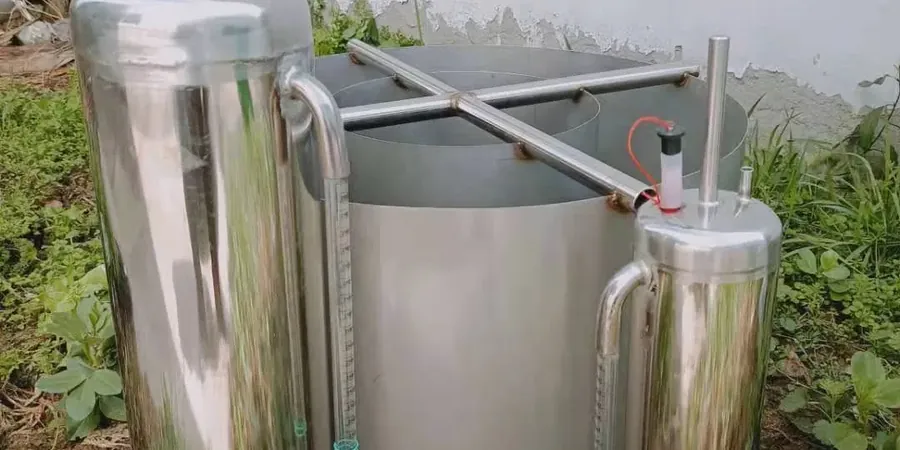
In Burnaby's marine clays, steady-state infiltration flow can take over 90 minutes to develop — we always budget extra time for these low-permeability units.
Service characteristics in Burnaby
Typical technical challenges in Burnaby
The heavy winter rainfall in Metro Vancouver — Burnaby averages about 1,200 mm annually — means stormwater management designs rely heavily on accurate infiltration numbers. If the test underestimates the actual field permeability, the soakaway pit may clog during the first wet season; if it overestimates, the pit may never drain properly. We mitigate that by running the test until the flow rate stabilizes for at least 30 consecutive minutes, and we always note the presence of root channels or desiccation cracks that could bias the result. For low-permeability clays we also recommend a falling-head phase to capture the true matrix flow without macropore interference.
Our services
We offer two infiltration testing options tailored to Burnaby conditions, from residential lots to municipal infrastructure projects.
Double-Ring Infiltrometer Test (ASTM D3385)
Full double-ring setup with constant-head maintenance, continuous data logging, and a final report showing saturated hydraulic conductivity (ksat), infiltration curve, and recommended design rate. Ideal for soakaway pits, permeable pavement subgrades, and stormwater retention basins in Burnaby.
Porchet Single-Ring Test (Falling-Head)
Simplified single-ring test using the Porchet method for shallow excavations, trench drains, or small residential lots where a quick percolation rate is sufficient. We excavate a 30 cm pit, saturate the soil, and measure the falling head over time. Report includes percolation rate in min/cm and a qualitative soil description.
Frequently asked questions
What is the difference between a double-ring and a Porchet infiltration test?
The double-ring method uses two concentric rings to isolate vertical flow and minimize lateral spreading, giving a more accurate saturated hydraulic conductivity (ksat) value for design. The Porchet single-ring test is a simpler falling-head method that measures percolation rate in a shallow pit; it is faster and cheaper but less precise. We recommend the double-ring for any engineered stormwater system in Burnaby where the clay layers could cause lateral flow errors.
How long does an infiltration test take on a typical Burnaby site?
A double-ring test usually takes 2 to 4 hours per location, but in Burnaby’s marine clays it can extend to 5 hours because the low permeability means steady-state flow develops slowly. The Porchet test is faster — about 1 to 1.5 hours — because you only measure falling head in a single pit. We always schedule the test early in the morning to avoid winter rain interruptions.
What does the infiltration report include?
The report provides the steady-state infiltration rate (mm/h) or saturated hydraulic conductivity (cm/s), the time to achieve steady flow, a soil description of each horizon encountered, and a recommendation for the design infiltration rate with a safety factor (typically 2 to 3 for clay soils). It also includes field data sheets, water temperature corrections, and photos of the test setup.
How much does an infiltration test cost in Burnaby?
The cost for a double-ring infiltrometer test ranges from CA$410 to CA$480 per location, including mobilization within Burnaby, equipment setup, field testing, and a full report. The Porchet single-ring test is typically CA$310 to CA$380. Prices may vary for multiple test locations, restricted access sites, or when additional soil sampling is required.