A 20-story residential tower on Kingsway near Metrotown sits on glaciofluvial deposits over deep till. The building owner needed base isolation seismic design to decouple the structure from the Fraser River delta's soft soil effects. We ran a full site response analysis using SHAKE2000 and processed shear-wave velocity profiles down to 30 meters. The final isolation system accommodated 450 mm of lateral displacement under the 2% in 50-year earthquake. This approach cut the design base shear by 55% compared to a fixed-base solution. For Burnaby's seismic environment, combining base isolation with a site-specific response spectrum was the only reliable path to meet NBCC 2020 ductility requirements.
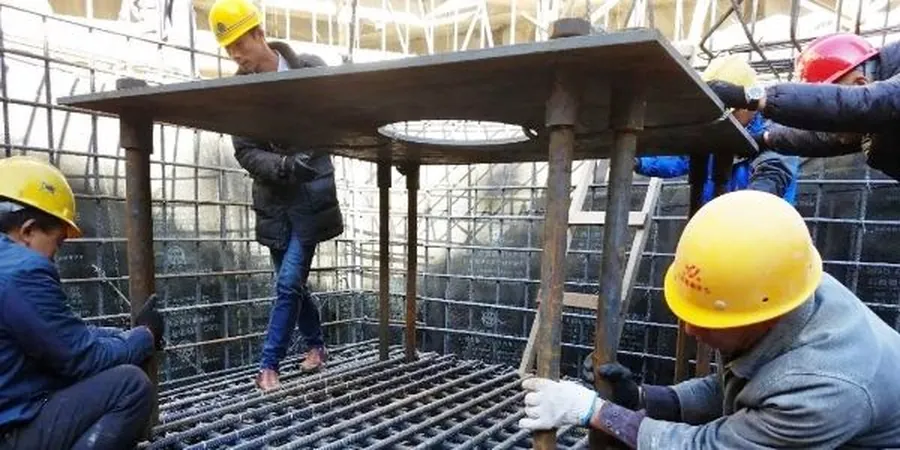
A properly tuned base isolation system can reduce seismic demand by over 50% compared to a conventional fixed-base structure in Burnaway's deep soil conditions.
Service characteristics in Burnaby
- Site-specific probabilistic seismic hazard analysis per NBCC 2020.
- Selection and scaling of ground-motion records from the Cascadia subduction zone.
- Nonlinear time-history analysis in LS-DYNA or SAP2000.
- Clearance gap design for maximum considered earthquake displacement.
Typical technical challenges in Burnaby
The soft soils of Burnaby's floodplains — particularly along Still Creek and the Brunette River — can amplify bedrock motions by a factor of 2 to 3. If the isolation period is not tuned correctly, resonance with the site's natural period (0.8–1.5 seconds for deep clay sites) can increase drift demands. We've seen cases where a poorly designed isolation system actually increased floor accelerations at higher modes. That's why we always pair base isolation seismic design with a full geotechnical site investigation to rule out liquefaction and lateral spreading below the isolation plane. The 2020 NBCC requires this explicitly for Seismic Site Class E and F soils.
Our services
We deliver two complementary service lines for base isolation seismic design in Burnaby:
Site-Specific Ground Motion Study
Probabilistic and deterministic seismic hazard analysis using the Geological Survey of Canada's 2020 model. Output includes uniform hazard spectra, conditional mean spectra, and time-history records scaled to the target response spectrum. We incorporate local basin effects from the Georgia Basin velocity model.
Isolation System Design & Verification
Design of lead-rubber bearings, friction pendulum bearings, or elastomeric systems based on the target performance objectives. We perform nonlinear time-history analysis with at least 7 ground-motion pairs. Deliverables include bearing force-displacement loops, clearance gap dimensions, and foundation interface forces.
Frequently asked questions
What makes base isolation seismic design different from conventional ductile design?
Conventional design relies on the structure yielding and dissipating energy through inelastic deformation. Base isolation decouples the building from the ground using flexible bearings, so the superstructure remains essentially elastic. This reduces floor accelerations and interstory drifts significantly, which is critical for hospitals, data centers, and high-value buildings in Burnaby.
Does Burnaby's proximity to the Cascadia subduction zone affect the design?
Yes, significantly. The Cascadia subduction zone can produce magnitude 9 earthquakes with long-duration (2–4 minutes) and long-period ground motions. Base isolation seismic design must account for these large, slow pulses. We use site-specific time histories that include both crustal and subduction events, scaled to the uniform hazard spectrum for Burnaby's location.
What is the typical cost range for a base isolation seismic design study in Burnaby?
For a mid-rise building (10–20 stories), the cost typically ranges between CA$6,310 and CA$12,350. This includes the site-specific hazard analysis, bearing sizing, time-history analysis, and a final design report. Large or complex projects with multiple isolation planes or irregular geometry may be higher.
How deep does the geotechnical investigation need to be for an isolation system?
We need shear-wave velocity profiles down to at least 30 meters (Vs30) to classify the site per NBCC. For deep basin sites in Burnaby, we often extend to 60–100 meters to capture the till and bedrock interface. We also need liquefaction susceptibility data for the top 20 meters to verify the stability of the isolation moat and foundation.
Can base isolation be retrofitted to an existing building in Burnaby?
Yes, but it requires careful structural and geotechnical coordination. The existing columns must be cut and supported while bearings are installed at the base. The surrounding moat and access ramps also need reconfiguration. We've completed retrofits on heritage buildings and aging concrete frames in the Metrotown area. It's more invasive than new construction but often less expensive than full structural upgrade.