Working in Burnaby, we see plenty of sites where the glacial till and interbedded silts make foundation design tricky. Before pouring any footing, a plate load test (PLT) gives you the real settlement data under controlled load. We run the test per ASTM D1196, using a 30-inch steel plate and a calibrated hydraulic jack. The reaction load comes from a heavy excavator or a concrete kentledge block. We measure deflection with dial gauges mounted on independent reference beams. The whole setup is straightforward, but the interpretation matters a lot. To complement the field data, we often recommend a study of soil classification to cross-check the material type against the load-settlement curve. That way, you get a complete picture of how the ground behaves under your proposed footing.
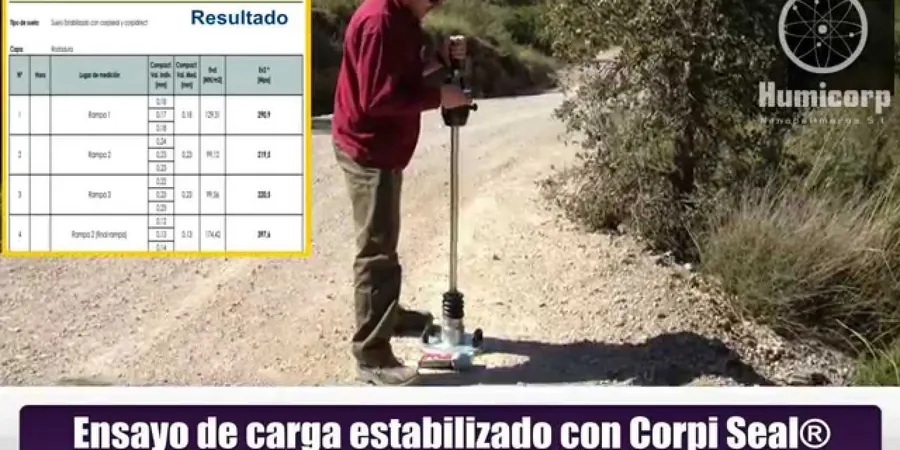
A plate load test gives you the real settlement under load, not a theoretical estimate from a borehole log.
Service characteristics in Burnaby
Typical technical challenges in Burnaby
Burnaby sits within a moderate seismic zone, and the 1946 Vancouver Island earthquake (M7.3) reminded everyone that ground failure is real. If you build a foundation without a proper plate load test (PLT), you risk differential settlement that cracks slabs and misaligns structural connections. In areas like the Big Bend or the glacial till slopes, the bearing capacity can vary by 50% over 10 meters. A single borehole won't catch that. We run PLTs at multiple locations across the footprint to map the variability. The cost of fixing a settled foundation after occupancy is easily 10 times the price of testing beforehand.
Our services
We offer a full suite of plate load testing services tailored to Burnaby's ground conditions. Each test is calibrated, supervised by a registered professional, and delivered with a signed report.
Standard PLT (Static)
Load applied in increments to 1.5x design pressure. Settlement recorded every minute. Report includes load-settlement curve, modulus of subgrade reaction, and ultimate bearing capacity.
Cyclic PLT
Repeated loading-unloading cycles to simulate traffic or seismic effects. Evaluates resilience and permanent settlement under cyclic loads. Ideal for bridge abutments and crane pads.
PLT on Compacted Fill
Verifies compaction quality and bearing capacity on engineered fill. Tested at the subgrade elevation. Results compared to Proctor compaction curves for acceptance.
Reaction Frame PLT
For sites where excavation access is limited. Uses a steel reaction frame with concrete blocks or tie-down anchors. Suitable for basements, existing slabs, and tight urban lots.
Frequently asked questions
How much does a plate load test cost in Burnaby?
The typical cost ranges between CA$1,050 and CA$1,600 per test location. This includes mobilization within Burnaby, setup, loading, data collection, and a signed report. Volume discounts apply for multiple test points.
How many plate load tests do I need for my project?
For a typical residential foundation, one PLT per 500 m² of footprint is standard. For commercial slabs, we recommend one test per 1,000 m² plus one test in each soil stratum encountered. Consult your geotechnical engineer for the exact count.
What is the difference between a plate load test and a CBR test?
A plate load test (PLT) measures bearing capacity and settlement under static load applied to a 30-inch plate at foundation depth. A CBR test measures shear resistance of a compacted sample under a 2-inch plunger, typically for pavement design. They serve different purposes: PLT for shallow foundations, CBR for road subgrades.