Burnaby’s roadway network contends with complex glacial till, marine clay, and steep terrain typical of the Lower Mainland. Proper design must address soft subgrades and high groundwater under CSA and BC Ministry of Transportation standards. Our flexible pavement design adapts asphalt layers to these soil conditions, while soil stabilization for roads strengthens weak formations before paving begins.
Municipal arterials, industrial access routes, and hillside residential streets all demand integrated geotechnical input. For bus lanes or heavy truck corridors, rigid pavement design delivers long-term durability with minimal maintenance. Each project benefits from early subsurface investigation to lock in performance across Burnaby’s variable geology.
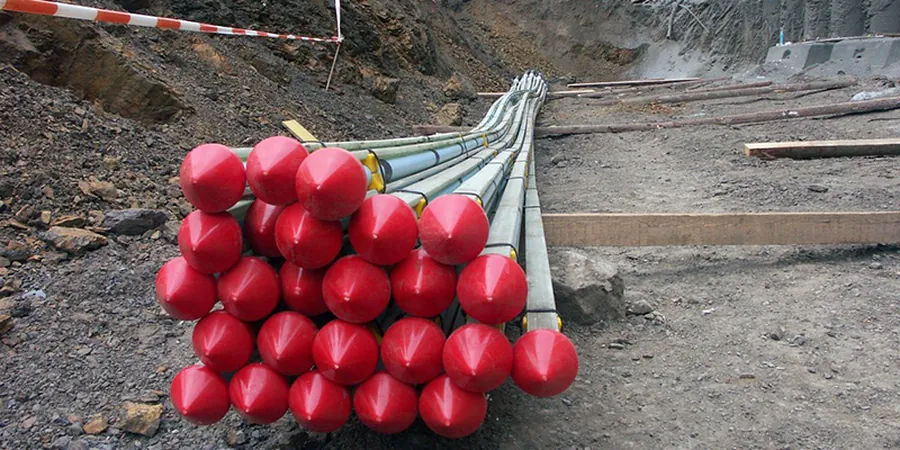
In Burnaby's mixed glacial deposits, an active anchor that loses preload can become a passive anchor overnight — the design must account for both states.
Service characteristics in Burnaby
Typical technical challenges in Burnaby
Burnaby sits on a mix of glacial till, glaciofluvial sands, and marine clays from the last ice age, with the water table often sitting 3 to 6 metres below grade. That shallow groundwater creates a real corrosion risk for steel tendons, especially in the lower elevations near the Brunette River. If the anchor is not designed as fully protected — with a greased and sheathed free length plus a grouted bond zone — the service life can drop below 20 years in these soils. The seismic hazard in the Lower Mainland also means that an active anchor must be able to yield without losing all preload during a design-level earthquake. That calls for careful elongation calculations and a corrosion protection system that survives ground movement.
Our services
We cover the full anchor design cycle in Burnaby — from feasibility and layout to installation supervision and proof testing.
Active Anchor Design (Prestressed Systems)
For retaining walls, foundation underpinning, and slope stabilization in Burnaby, we design active anchors that are locked off at a predetermined load. Each design includes bond length verification, free-stress length calculation, and corrosion protection selection per CSA A23.3. We also prepare the proof-test schedule and acceptance criteria.
Passive Anchor Design (Tie-Backs & Deadmen)
Passive anchors rely on soil or rock resistance without prestressing. We design these for temporary shoring, basement excavations, and tower crane foundations where active preload is not required. The design accounts for creep in Burnaby's marine clays and includes a factor of safety of 1.5 on bond capacity.
Frequently asked questions
What is the difference between an active and a passive anchor in practice?
An active anchor is prestressed to a specific load after installation, putting the ground into compression and limiting movement from the start. A passive anchor is not prestressed — it only resists load after the ground starts to move or the structure deflects. In Burnaby, active anchors are preferred for permanent walls and seismic retrofit, while passive anchors work well for temporary shoring where some movement is acceptable.
How much does active/passive anchor design cost in Burnaby?
The design fee for a typical residential or light commercial anchor system in Burnaby ranges between CA$1.440 and CA$5.060, depending on the number of anchors, soil investigation required, and whether proof testing is included. Complex multi-anchor walls for high-rise basements can exceed that range. We always provide a fixed-price proposal after reviewing the geotechnical report.
What corrosion protection is required for permanent anchors in Burnaby?
For permanent anchors, CSA A23.3 requires double corrosion protection: the tendon is greased and encased in a corrugated plastic sheath in the free length, and the bond zone is fully grouted with a minimum 20 mm cover. In Burnaby's corrosive soils near the water table, we also specify a cement grout with low permeability (k < 1×10⁻¹² m/s) to limit chloride ingress.