A cut slope along Lougheed Highway started seeping after a week of heavy rain. Within three days, the shoulder had softened and a small slump developed near the culvert. That is why any road project in Burnaby needs a dedicated geotechnical road drainage design before grading begins. We look at soil types, groundwater levels, and seasonal rainfall patterns to size the system correctly. For sites with perched water tables, we often combine trench drains with a permeability field test to confirm flow rates and select the right filter material. Getting drainage right from the start prevents costly repairs later.
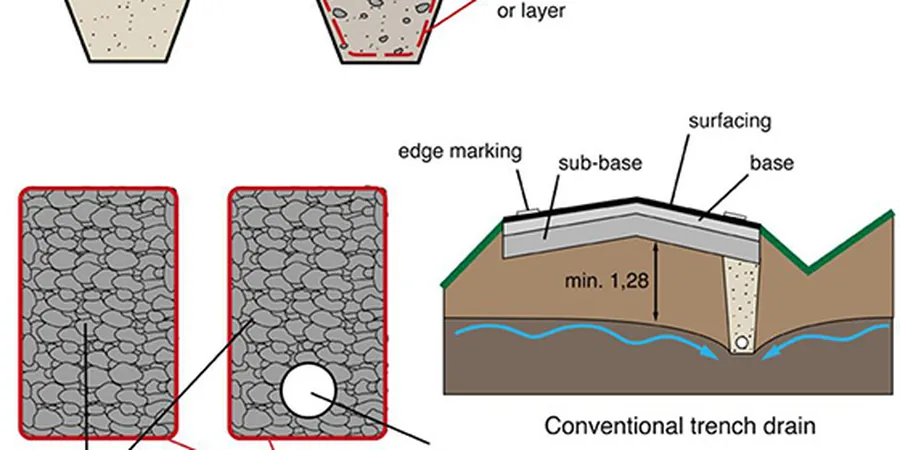
A road built without subsurface drainage in Burnaby's marine clay can lose 50 percent of its design life before the first resurfacing cycle.
Service characteristics in Burnaby
Typical technical challenges in Burnaby
In Burnaby, the biggest mistake we see is treating road drainage as a civil-only task, leaving the geotechnical side for later. When clay subgrades get saturated during construction, they turn into a slurry that cannot be compacted properly. That leads to differential settlement, cracked pavement, and edge failures within the first two winters. A geotechnical road drainage assessment looks at the soil's natural moisture content, the depth to seasonal high groundwater, and the risk of piping along utility trenches. The earlier that information is on the table, the better the road holds up.
Our services
We provide two core services for geotechnical road drainage in Burnaby, each tailored to the local geology and rainfall regime.
Subsurface Drainage Design
We size and locate trench drains, horizontal drains, and geocomposite wall drains based on soil permeability data and groundwater monitoring. The design follows ASTM D4716 for geocomposite flow capacity and includes filter compatibility checks to prevent clogging in Burnaby's silty clays.
Drainage Construction Supervision
Our team oversees the installation of perforated pipes, filter wraps, and outlet structures. We verify that filter fabric overlaps meet spec, that pipe gradients are maintained, and that the drainage layer connects properly to the subgrade. On-site testing during construction catches issues before the pavement goes down.
Frequently asked questions
How does geotechnical road drainage differ from standard stormwater drainage?
Standard stormwater drainage handles surface runoff from rain events. Geotechnical road drainage targets subsurface water that seeps into the road base and subgrade from below. In Burnaby's clay soils, that subsurface flow is often the main cause of pavement damage, so we design interception drains and filter layers specifically for the local groundwater regime.
What is the typical cost range for a geotechnical road drainage study in Burnaby?
For a typical road section of 200 to 500 meters, the geotechnical drainage study (including field permeability tests, analysis, and design recommendations) ranges from CA$1.170 to CA$3.000. The final cost depends on site access, number of test pits, and complexity of the groundwater conditions.
Do I need a drainage design if the road is on a slope?
Yes, especially on a slope. In Burnaby, hillside roads often have seepage zones where groundwater emerges at the cut face. Without subsurface interception, that water saturates the pavement base and can trigger shallow landslides. A properly designed drainage system diverts the water before it reaches the road structure, keeping both the pavement and the slope stable.