Burnaby's complex glacial till and marine clay deposits demand precise monitoring. The municipality sits on the Fraser River delta's eastern edge, where soft soils reach depths over 200 meters in some areas. Geotechnical instrumentation provides real-time data on pore pressure, lateral displacement, and settlement rates during construction. Without it, engineers risk designing foundations on assumptions rather than measurements. Our team designs and installs piezometers, inclinometers, and settlement plates tailored to Burnaby's stratigraphy. We also deploy vibrating-wire strain gauges on retaining structures near Metrotown developments. These instruments feed data into predictive models that refine excavation support and foundation design. Complementary deep soil mixing can improve ground conditions where instrumentation detects excessive deformation.
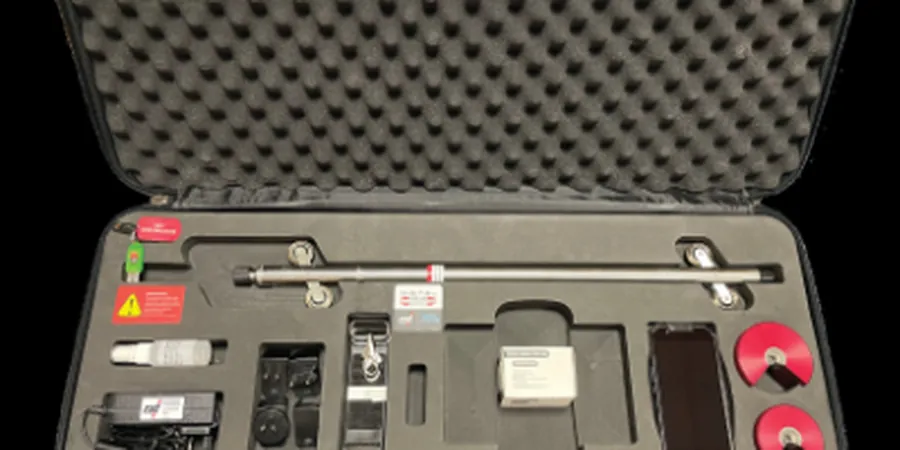
Real-time pore pressure monitoring in Burnaby's marine clays can reduce foundation costs by 15% while meeting NBCC performance requirements.
Service characteristics in Burnaby
- Pore water pressure dissipation rates in marine clay layers
- Horizontal displacement vectors near shored excavations
- Total earth pressure against diaphragm walls
- Settlement rates under preload fills
Typical technical challenges in Burnaby
A common mistake in Burnaby is relying on single-point piezometer readings to assess regional pore pressure gradients. The interbedded sand lenses within the marine clay create perched water conditions that vary within meters. One developer near Brentwood installed only two piezometers for a 10-storey tower; mid-excavation, a sand seam caused a 40 kPa pressure spike that went undetected until heave cracked the basement slab. Proper geotechnical instrumentation networks must include multiple sensors at different depths and lateral positions. Cross-hole vs30/" data-interlink="1">shear wave velocity profiling should complement pore pressure monitoring when liquefaction susceptibility is a concern. Without this coverage, excavation bottom instability or excessive settlement claims become likely.
Our services
We deliver complete geotechnical instrumentation services for Burnaby projects, from sensor selection through data interpretation.
Piezometer Installation and Monitoring
Vibrating-wire and pneumatic piezometers installed in boreholes or pushed directly into soft clay. Continuous logging of pore pressure with automated alerts.
Inclinometer Casing and Surveys
Vertical casing installation in boreholes or within diaphragm walls. Baseline surveys and periodic profiling to detect lateral movements as low as 0.1 mm.
Settlement and Heave Monitoring
Surface settlement plates, deep rod extensometers, and tiltmeters. Real-time data fed into settlement predictions for preload and foundation programs.
Earth Pressure Cells
Total pressure cells placed against retaining walls or beneath footings. Data used to verify design assumptions and adjust tieback loads during excavation.
Frequently asked questions
How much does geotechnical instrumentation cost in Burnaby?
The typical range for a mid-size building project is CA$3,880 to CA$6,350, including installation, 90 days of monitoring, and a summary report. Costs scale with sensor count and project duration.
What sensors are recommended for Burnaby's marine clay?
Pneumatic or vibrating-wire piezometers for pore pressure, shape-array inclinometers for lateral movement, and deep rod extensometers for settlement. All must be sealed in bentonite grout to avoid cross-contamination between sand lenses.
How long should monitoring continue after excavation?
At least 12 months post-construction for marine clay sites in Burnaby. Primary consolidation in these soils can take 6 to 18 months. Monitoring should continue until settlement rates drop below 2 mm per month.
Can instrumentation trigger automatic alarms?
Yes. Our systems include configurable thresholds for pore pressure, lateral displacement, and settlement. Alarms send SMS or email alerts to the project engineer when limits are exceeded, enabling real-time response.
What certifications does your laboratory hold?
Our instrumentation team operates under ISO 17025 accreditation for sensor calibration. All data loggers meet CSA standards for environmental resistance. Field technicians are certified in confined-space entry and fall protection.