Burnaby grew fast after the 1950s, pushing development onto the steep slopes of Burnaby Mountain and the low-lying floodplains of the Brunette River. Those contrasting geologies — glacial till over bedrock, deltaic sands, and organic silts — make permeability a critical design parameter. A field permeability test (Lefranc / Lugeon) is the only reliable way to measure in-situ hydraulic conductivity in these layered profiles. We run constant-head and falling-head tests depending on the formation, targeting the saturated zone below the water table. For shallow infrastructure in the City of Burnaby we often pair this with a dilatometer test to capture horizontal stress and stiffness simultaneously. The data feeds directly into dewatering design, seepage analysis, and foundation drainage specifications.
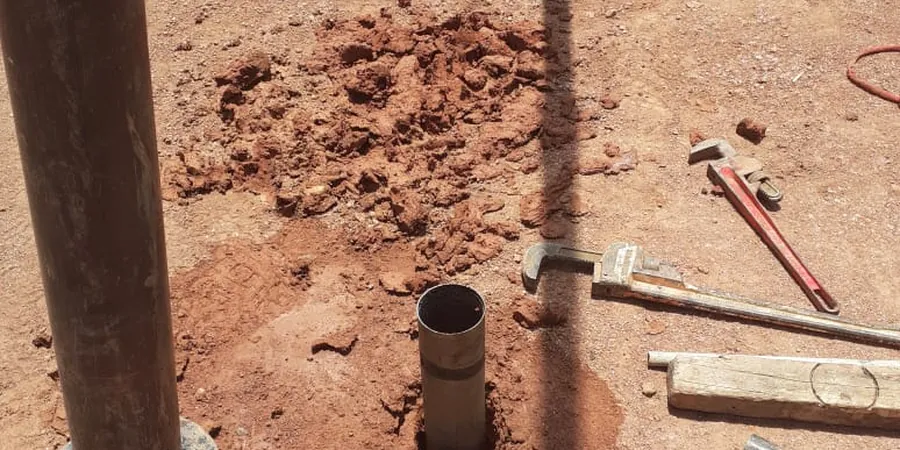
In Burnaby’s till-and-sand stratigraphy, a single field permeability test can cut dewatering cost estimates by 30 % versus table values.
Service characteristics in Burnaby
Typical technical challenges in Burnaby
The National Building Code of Canada (NBCC 2020) requires groundwater control measures for any excavation deeper than 1.2 m in Burnaby. If the field permeability test (Lefranc / Lugeon) is skipped, designers rely on published soil maps that often overestimate k by a factor of 10. That leads to undersized dewatering systems — or worse, base heave during excavation. In the Burnaby Lake area, where organic silts underlie 3–6 m of sand, misjudging vertical permeability can trigger piping failure at sheetpile toes. We have seen several residential basements flood because the assumed k was wrong. A properly run test eliminates that guesswork.
Our services
We tailor each field permeability test (Lefranc / Lugeon) to the specific geologic conditions in Burnaby. The three main configurations we offer are listed below.
Lefranc Constant-Head Test
For sands and gravels where the water table is shallow. We maintain a constant head inside the casing and measure inflow rate. Used on Burnaby’s deltaic deposits near the Fraser River.
Lefranc Falling-Head Test
For silts and tills with lower permeability. We record head drop over time in a sealed standpipe. Preferred on Burnaby Mountain, where till layers are tight but still drain.
Lugeon Packer Test
For fractured bedrock or coarse gravels. Double packers isolate a 1 m interval; we apply multi-step pressure cycles. Common for deep excavations and tunnel alignments in Burnaby’s bedrock cuts.
Frequently asked questions
What is the difference between Lefranc and Lugeon tests?
The Lefranc test measures permeability in unconsolidated soils using a single casing and either constant or falling head. The Lugeon test uses inflatable packers to isolate an interval in rock or coarse gravel and applies stepped pressures to compute k. Both follow CSA Z768; the choice depends on the formation. In Burnaby, we run Lefranc in the till and sand zones, and Lugeon where bedrock is encountered at depth.
How long does a field permeability test take on a typical Burnaby site?
A single-interval Lefranc test takes 30–60 minutes, including setup and water stabilisation. A Lugeon test with three pressure steps runs about 90 minutes per interval. The total field time for a 10 m borehole with two intervals is usually 2–3 hours, plus mobilisation.
Can you run the test in low-permeability till common in Burnaby?
Yes. In the dense lodgement till found under Capitol Hill and parts of the Burnaby Mountain area, we use the falling-head Lefranc method. The test works reliably for k values as low as 10⁻⁸ m/s. Below that, we recommend a transient pressure test with a packer system. Our lab is accredited to ISO 17025 for permeability testing in both the field and the laboratory.
What does a field permeability test cost in Burnaby?
The typical cost for a field permeability test (Lefranc / Lugeon) in Burnaby ranges between CA$750 and CA$1,240 per test interval. The final price depends on depth, number of intervals, and site access. We provide a fixed quote after reviewing the borehole log and site conditions.