Burnaby's subsurface profile is dominated by glaciomarine and post-glacial deposits. Soft to firm silty clays and peat layers extend to depths of 15 to 30 meters in many areas, especially along the Deer Lake and Burnaby Lake corridors. Groundwater levels sit within 2 to 4 meters of the surface. These conditions demand careful evaluation before any ground improvement program. Deep soil mixing design in Burnaby must account for variable organic content, high moisture ratios, and low undrained shear strength. A reliable design integrates site-specific data from probe holes and laboratory testing. We always recommend pairing the soil mixing plan with a geotechnical investigation to map stratigraphy and with field permeability tests to assess hydraulic conductivity.
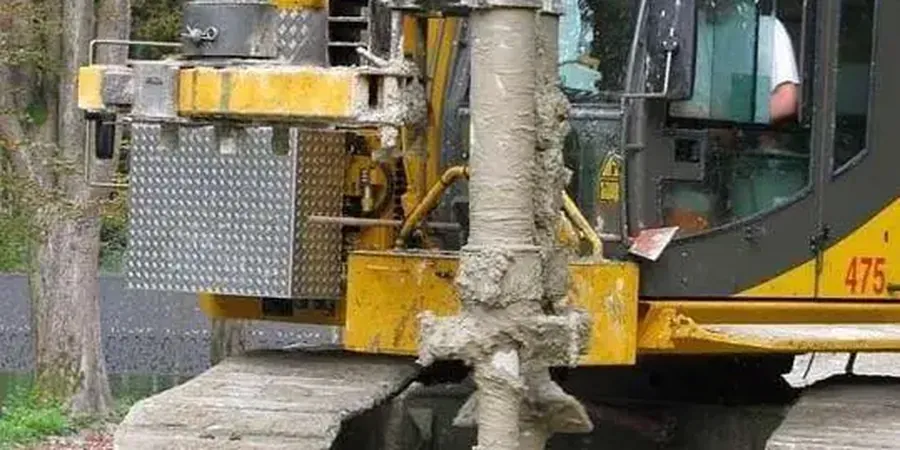
Deep soil mixing design in Burnaby relies on site-specific binder optimization — generic parameters fail in glaciomarine silts with organic content above 5 percent.
Service characteristics in Burnaby
Typical technical challenges in Burnaby
In Burnaby, many projects underestimate the effect of peat laminae within the clay matrix. These thin layers, sometimes only 10 cm thick, create preferential flow paths for binder slurry. Without proper mixing energy, the binder bypasses the clay and escapes into the peat seams. This results in untreated zones and non-uniform column strength. We have observed strength variability exceeding 40 percent in columns installed without rotational speed control. Adjusting blade rotation from 30 to 50 rpm and maintaining a penetration rate below 1 m/min reduces this risk significantly. Deep soil mixing design in Burnaby must include a quality control protocol with field strength testing every 200 m³ of treated ground.
Our services
We provide three complementary deep soil mixing design services tailored to Burnaby's ground conditions.
Binder Optimization & Mix Design
Laboratory-based determination of binder type (cement, slag, or lime) and dosage to achieve target strength and permeability for Burnaby soils.
Column Layout & Structural Design
Calculation of column diameter, spacing, and depth based on applied loads, settlement criteria, and soil variability. Includes bearing capacity and group efficiency analysis.
Quality Control & Field Verification
On-site monitoring of installation parameters plus coring, unconfined compression testing, and statistical assessment of column uniformity.
Frequently asked questions
How does organic content affect deep soil mixing design in Burnaby?
Organic matter above 5 percent delays cement hydration and reduces final strength. We offset this by increasing binder dosage up to 400 kg/m³ and using a slag-cement blend. Pre-treatment with lime may be required for organic contents above 8 percent.
What is the typical strength gain for deep soil mixing columns in Burnaby clay?
Unconfined compressive strength values range from 0.5 to 2.0 MPa at 28 days, depending on binder type and dosage. Glaciomarine silty clays with low organic content reach 1.5 MPa; peat-influenced zones require higher binder dosages to achieve 0.8 MPa.
How much does deep soil mixing design cost in Burnaby?
The cost for a full design package including binder optimization, column layout, and quality control plan ranges between CA$2.170 and CA$9.520. The final price depends on project volume, number of soil types, and required testing frequency.
What quality control tests are performed during installation?
We monitor rotational speed, penetration rate, binder flow rate, and grout pressure in real time. Field verification includes wet grab sampling, coring at 14 or 28 days, and unconfined compression testing. Statistical acceptance criteria follow FHWA GEC 13 guidelines.